This is not homework for bedtime. Choose a prompt if it helps, skip it if it doesn’t, and let the book be enough.
From the book · physical p. 28Imagined present-day reflection
A SHARED OBSERVATION, NOT A TEST
You don’t need to supply every answer.
The book makes space for not knowing. Be beside your child rather than ahead of them: look, listen, and let their response shape the next small question.
Keep the difference clear: the Wright brothers’ work is documented history; the paper airplane, girl, Mom and Cali are part of an imagined present-day reflection.
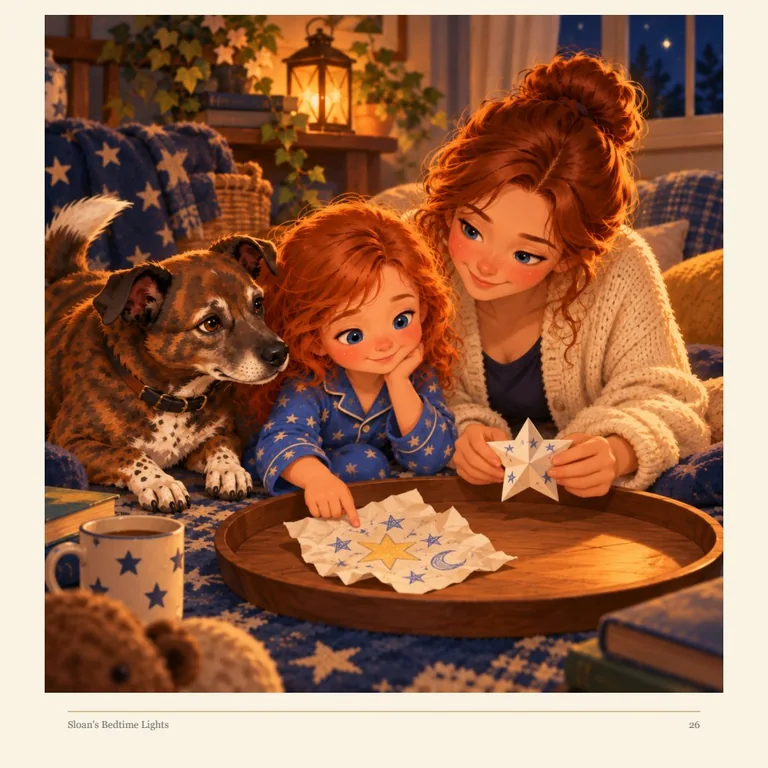
Before reading, place a plain piece of paper between you. Ask, “What is one thing you wonder about this?” Wait, without turning the answer into a lesson. Your child may want to touch the paper, ask something unrelated, or not answer.
A grown-up can say: “We can wonder without knowing yet.”
02 / WHILE
Notice, rather than judge.
PAUSE AT PHYSICAL P. 29
This page makes room for shared observation, a changed plan, asking for help and another day. Ask, “What did you notice?” rather than “Did it work?” If you fold paper together, describe what you can see before deciding what to change.
A grown-up can say: “We could change one fold, ask for help, or put it down.”
03 / AFTER
Let a small step be enough.
RETURN TO PHYSICAL P. 31
Ask, “Would you like one little next step, or would you like to rest?” A next step might be looking more closely, making a mark on paper, or asking a question tomorrow. It does not have to be a finished airplane.
A grown-up can say: “You do not have to become anything tonight.”
These are original companion prompts, not quotations from the story or from the Wright brothers. This is shared reading, not a quiz or a treatment.
“Your dreams are allowed to be big, and your next step is allowed to be small.”From the book · physical p. 31
WHEN YOU’RE READY, PUT THE SCREEN DOWN
A piece of paper. A grown-up. One question.
Make room. Choose a clear space with a grown-up, away from stairs, roads, breakables, people and pets. Use plain paper, not sharp or weighted materials.
Pick one thing. Fold a simple paper airplane together. Look at it first. You can compare the shapes on the table without throwing anything.
Observe together. If you choose to try a gentle glide, have the grown-up check the space first. Never aim at people or animals. Notice a turn, a wobble, or where it comes to rest; no measuring contest needed.
Change, ask, or rest. Change one fold if you want another observation. Other conditions may also change. There is no promised result, and no need to finish.